Dental support organizations (DSOs) operate under relentless pressure to deliver measurable financial results and validate every operational decision.
To stay ahead and grow, your DSO needs a focused revenue cycle strategy. Setting clear financial and operations goals helps your whole team know what to work toward each day. When your goals are specific, you can track results, spot problems such as slow payments or process slowdowns, and quickly address risks that could impact cash flow. Goals also make sure everyone’s decisions support your DSO’s plans for growth and patient care.
With so many different metrics and goals, which ones should you focus on?
For example, a CFO may see net collection rate as the most important measure, while an RCM leader may see it as too broad for daily management. Still, DSOs can agree on a set of key goals that keep everyone focused and support the business.
In this article, you’ll find RCM goals by stakeholder to better understand their priorities.
What RCM Goals Does Finance Prioritize?
Finance teams prioritize higher-level metrics that signal long-term growth and revenue integrity. This strategic perspective ensures sustained profitability and positions the organization for ongoing expansion.
These strategic financial health metrics include:
EBITDA
EBITDA is a financial metric that stands for Earnings Before Interest, Taxes, Depreciation, and Amortization. It measures a DSO’s operating performance and profitability and often indicates acquisition or expansion opportunities.

It also presents transparent results to investors or stakeholders. These metrics support high-level planning and ensure the organization's long-term viability.
Quality of Revenue
The quality of revenue measures how reliably a DSO can collect receivables. Weak RCM processes, characterized by high overdue receivables and manual inefficiencies, diminish investor confidence and lower valuation multiples. The stronger the RCM processes, the higher the quality of revenue.
AR Over 30/60/90 Days
Understanding aging AR is critical to managing overall cash flow and liquidity. Monitoring AR aging allows CFOs to identify delays and risks in cash flow, ensuring the organization can predict and manage working capital for ongoing obligations and strategic investments.
Net Collection Rate
Net collection rate is the percentage of allowed charges collected after adjustments and write-offs. CFOs prioritize net collection rate because it directly measures revenue integrity, showing how much of the collectible revenue is actually realized.
It identifies underpayments, fee schedule inaccuracies, and unresolved denials, serving as a clear benchmark for whether financial processes are effective and sustainable.
Gross Collection Rate
The total payments received as a percentage of total charges. Gross collection rate monitors how much of total billed services turns into actual revenue before adjustments.
This metric highlights overall billing productivity and exposes issues with underbilling or poor insurance reimbursement negotiations that affect financial outcomes.
Total Revenue Collected and Profit Margins
Total revenue and profit margins are used to assess the organization’s financial health, set strategic plans, and ensure the business is not just collecting money but remaining profitable after all expenses.
All of these goals are central to CFO oversight, as they indicate the organization’s financial health, sustainability, and profitability—providing context for investment, growth, and resource allocation.
What RCM Goals Do Billers Rely On?
If you are a finance executive or investor, reviewing what each goal means to billers helps you understand their daily priorities. This cross-role understanding aligns financial strategies with operational realities, ensuring smoother claims processing and improved cash flow.
The following goals enable billers to proactively detect revenue leaks and take corrective action before small inefficiencies grow into major cash flow problems.
Billers track these metrics to determine success.
Clean Claim Rate
The percentage of claims processed without errors on first submission. Each clean claim is more likely to be paid promptly, with less time wasted correcting errors or resubmitting. A clean claim rate reduces rework and optimizes overall cash flow.
Days in Accounts Receivable (AR)
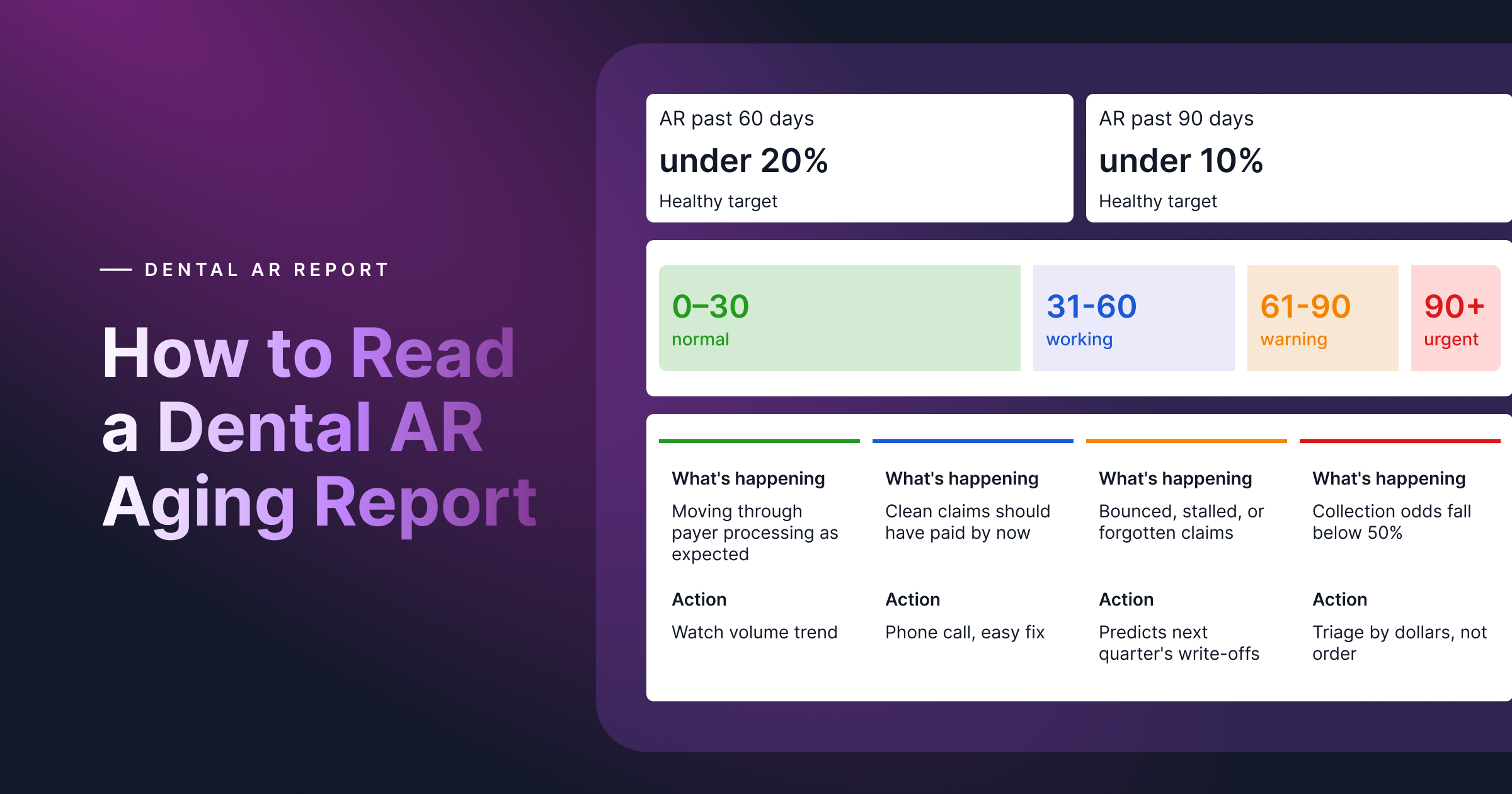
This metric tracks how quickly payments are collected. Monitoring days in AR helps billers quickly spot payment delays and identify accounts or payers that require attention, minimizing the risk of aging receivables going uncollected and maintaining healthy practice cash flow.
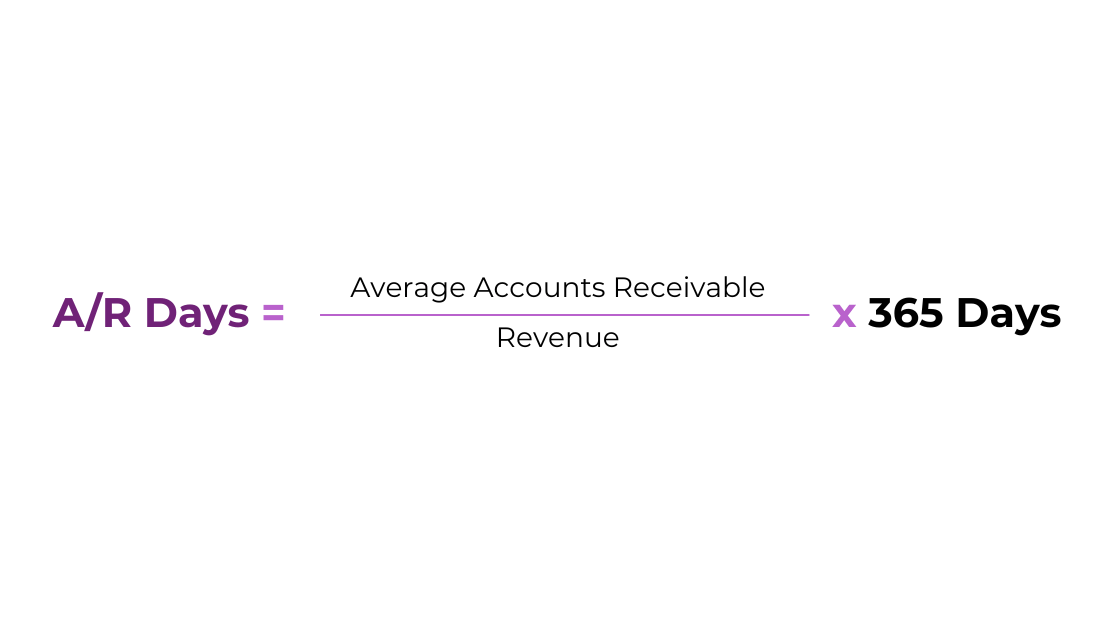
Declining days in AR reflect effective revenue cycle workflows. Rising days in AR indicate issues at the DSO or with the payer.
Denial Rate and First-Pass Resolution Rate
Indicates how often claims require correction or resubmission. By focusing on reducing denial rates and improving first-pass resolution, billers can reduce the admin burden of appeals and corrections, resulting in more predictable collections and fewer revenue leaks.
Percentage of Claims Requiring Manual Follow-up
Reveals workflow bottlenecks. A lower percentage of manual follow-ups indicates efficient automated processes and effective claim submissions. On the other hand, a higher percentage points to systemic issues that billers need to resolve to avoid staff burnout and payment delays.
What RCM Goals Do PE Firms Look For?
Finance executives prioritize comprehensive markers of revenue integrity and organizational profitability to drive sustainable growth. Private investors, bankers and private equity firms, however, approach RCM from an investment perspective.
They emphasize metrics that directly influence enterprise valuations, acquisition decisions, and long-term returns. Their financial analysis pinpoints value creation, deal potential, and investor returns.
PE firms and investors in dental organizations prioritize the following goals and metrics:
EBITDA
EBITDA is the primary metric for valuing dental practices and DSOs because it reflects the true operating cash flow and profitability. Investors use EBITDA multiples to set acquisition prices and compare returns across practices and industries.
EBITDA Margin
This measures a company’s operating profit as a percentage of its total revenue. EBITDA margin indicates how efficiently a practice converts its revenue into profit. A high margin signals strong management, cost control, and scalable business operations, making the practice more attractive for investment and growth.
Revenue Growth Rate
Demonstrates how quickly a business is expanding its sales. It reflects the effectiveness of its marketing and operational strategies—an indicator of financial health.
Consistent and increasing revenue is crucial as it demonstrates market demand, scalability, and future profit potential. Practices with strong historical and projected growth command higher valuations by projecting higher investor returns.
Net Collection Rate
A high net collection rate shows the practice reliably collects what it is owed, minimizing revenue leakage and improving cash flow. Investors value practices with high collection efficiency since it lowers risk and enhance returns.
Total Revenue & Practice Size
Larger practices or DSOs offer greater market share, economies of scale, and are easier to grow through further acquisition or optimization. High total revenue correlates with greater financial stability and bargaining power in the market.
Patient Base Growth & Retention
A growing patient base signals long-term viability and potential for further revenue expansion. While strong retention rates demonstrate patient satisfaction and recurring revenue, both key to sustainable growth.
Profitability Per Patient/Service Line
Profitability per patient helps investors understand the most valuable offerings and how effectively resources are utilized. Maximizing profits from existing and new patients increases overall investment appeal.
AR Over 30/60/90 Days
Investors track accounts receivable aging to assess cash flow stability and the risk of bad debts. Efficient AR management reduces working capital requirements and flags operational issues that could impact profitability.
Scalability and Operational Efficiency
PE firms seek practices with established processes, technology adoption, and centralized management that can be scaled across new locations or acquired practices, optimizing returns and facilitating expansion.
Private equity firms prioritize a distinct set of RCM goals that reflect investor requirements for sustainable growth, valuation clarity, and operational efficiency. They prioritize actual value and future potential of dental practices and DSOs. By centering due diligence on these indicators, PE firms optimize both acquisition opportunities and long-term returns.
How to Manage Different Stakeholders with Different Goals
DSOs can manage different stakeholders with competing goals by focusing on goal alignment and clear communication. Before you even introduce goals, try to have these aspects in place:
- Collaborative Leadership: Use collaborative leadership strategies that actively engage stakeholders—owners, clinicians, finance teams, billers, and investors—in open dialogue to surface concerns, clarify objectives, and foster mutual understanding.
- Change Management: Implement clear change management processes that include setting expectations, defining roles, and communicating the “why” behind changes. Leadership needs to secure buy-in, especially when introducing new technology or operational shifts, and explain how adjustments will benefit each stakeholder.
- Aligning Metrics and Incentives: Standardizing performance metrics and incentives helps bridge gaps between groups. When everyone works toward unified goals—such as improved patient experience, financial health, and efficiency—the likelihood of internal conflict decreases.
- Structured Goal Setting and Feedback Loops: Establishing consistent, cross-functional goal-setting sessions allows all groups to review progress, address tensions, and adapt strategies together. Regular team meetings and one-on-one conversations create opportunities for improvement.
- Transparency and Leadership: Sustainable DSOs maintain transparency about organizational objectives and trade-offs, uphold ethical standards, and explain decisions honestly, thereby reducing resistance and aligning diverse interests with the practice’s mission and core values.
DSOs can harmonize the various priorities of owners, clinicians, finance teams, billers, and investors, positioning the organization for collective success.
InsideDesk Helps DSOs Establish the Goals Critical to Scale
As group practices and DSOs face mounting pressure to grow efficiently, it has become clear that aligning operational and financial goals is fundamental to sustained growth and resilience.
By embracing advanced data tools and predictive analytics, DSOs can transform raw performance data into actionable insights that guide smarter financial strategies and day-to-day improvements. This sets the stage for modern claims management.
As explored in a recent issue of the Journal of Michigan Dental Association, “A mismanaged RCM process can quickly disrupt the practice’s ability to provide top-tier patient care.” The pole-star for revenue cycle management is carefully considered goals.
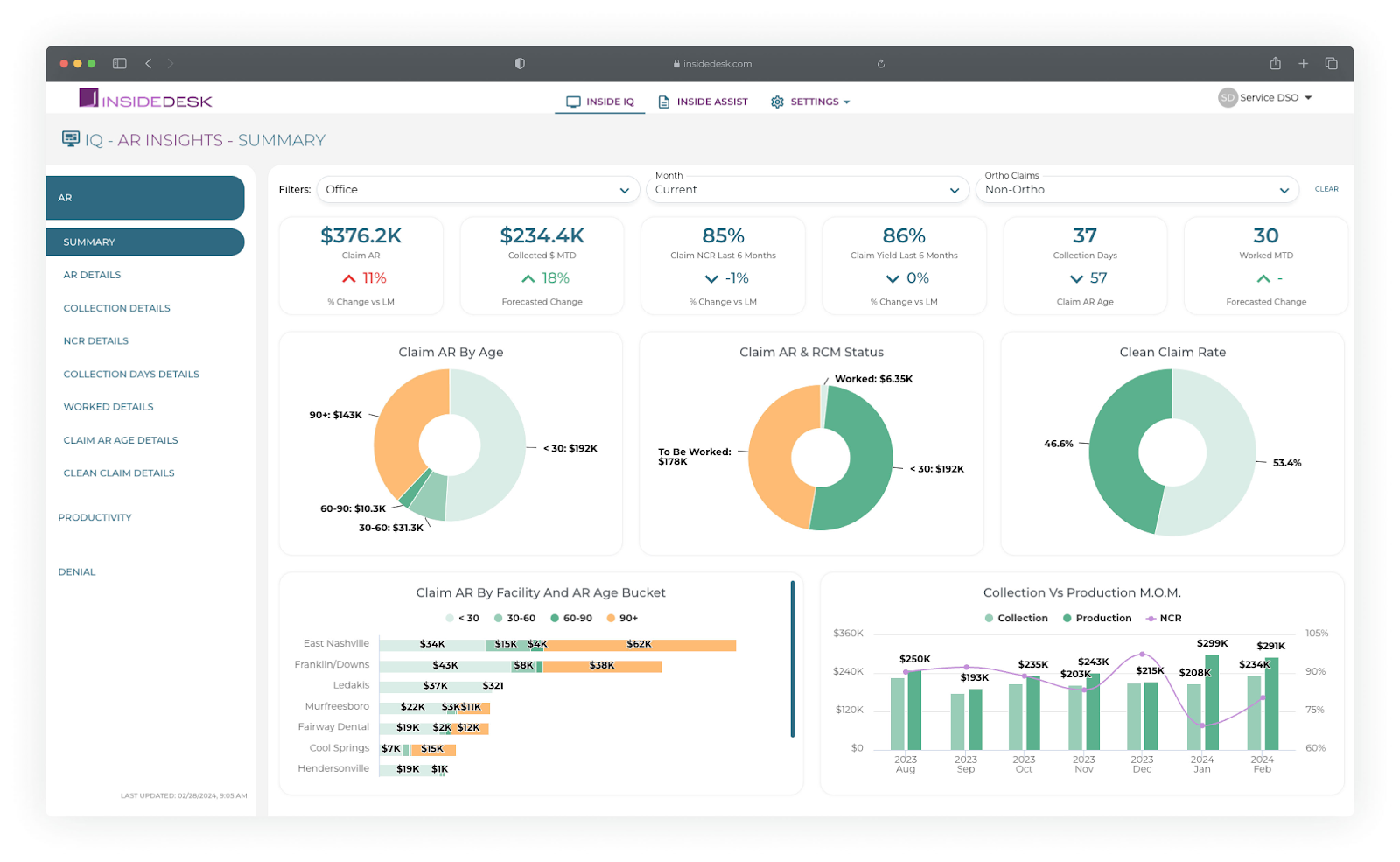
InsideDesk’s innovative revenue cycle management platform transforms how DSOs operate by automating manual billing processes, integrating data for actionable insights, and empowering teams to focus on what drives revenue. With InsideAssist streamlining claims management and denial tracking, InsideIQ delivers rich analytics and benchmarking. DSOs gain the visibility and efficiency needed to accelerate collections and reduce costs.
Schedule a demo with InsideDesk today to start building a more resilient and profitable future.